Three Job Roles Important In Every AI Ethics Team
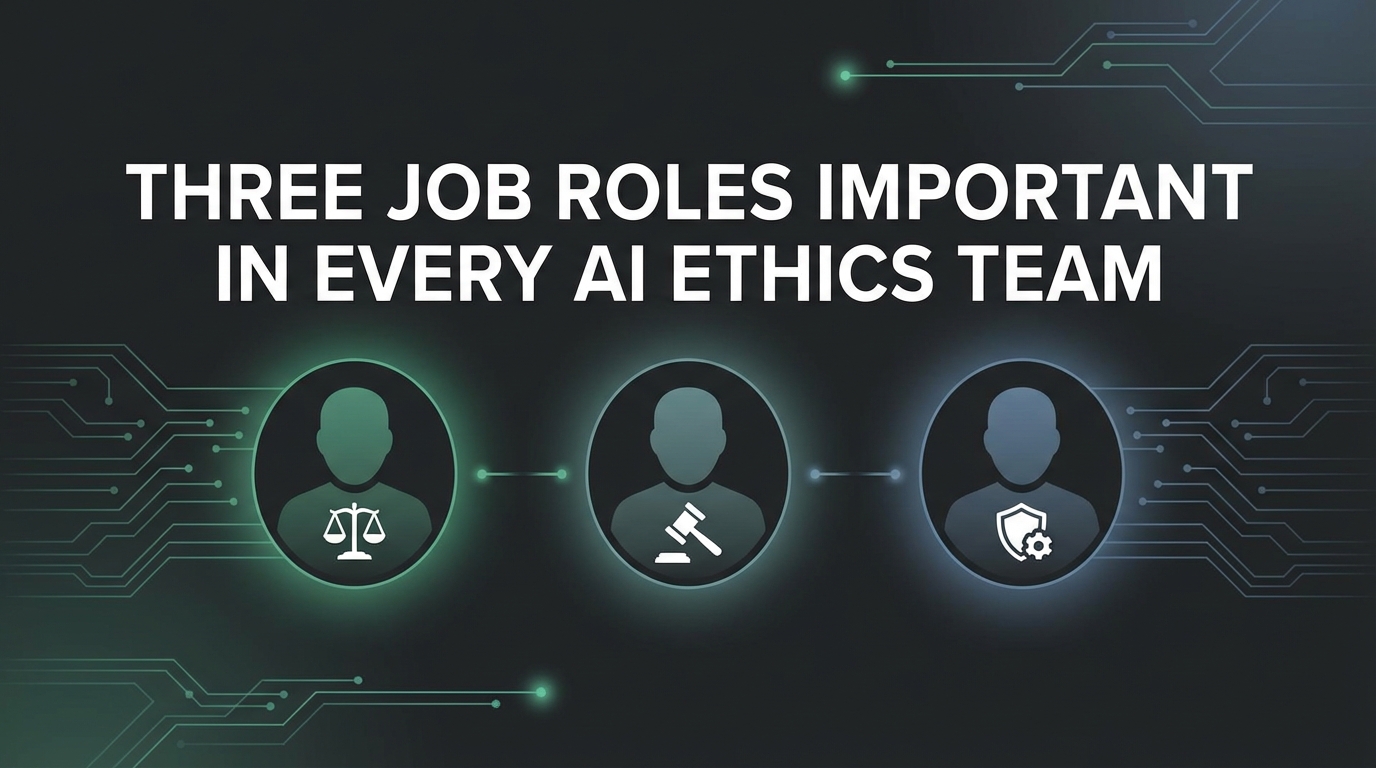
As AI progresses, AI Ethics teams are essential for ensuring the responsible use of AI technologies. Building a team with diverse expertise is crucial for addressing the multifaceted challenges posed by intelligent systems. Here are three key roles that are fundamental to any modern AI Ethics team.
1. AI Ethicist
The AI Ethicist plays a pivotal role in guiding ethical development. Their duties involve:
- Conducting ethical impact assessments of AI systems.
- Evaluating technologies on fairness, privacy, and transparency.
- Educating team members on ethical challenges and decision-making.
For more information on this career path, see the University of San Diego guidelines.
2. AI Policy Analyst
The AI Policy Analyst is crucial for understanding the evolving regulatory environment. Key responsibilities include:
- Analyzing and interpreting global AI regulations like the EU AI Act.
- Advising on compliance and proposing internal policy updates.
- Collaborating with legal teams to ensure adherence to relevant laws.
You can find a sample job description from the OECD.
3. AI Governance Expert
The AI Governance Specialist ensures that technologies are used responsibly within the organization. They focus on:
- Developing data management and lifecycle guidelines.
- Establishing performance and risk metrics for AI systems.
- Promoting internal audits and selecting tools for automated enforcement.
Challenges and Future Trends
AI Ethics teams confront numerous challenges, including the fast pace of development outstripping the formulation of guidelines. Looking ahead, we expect an environment of increased regulation and a greater emphasis on ethics in the design phase ("Ethics by Design"). Collaborations across industries will be crucial to standardize ethical guidelines and develop explainable AI systems.
In conclusion, the integration of these roles is vital for shaping the responsible use of AI. As technology evolves, the significance of these teams will only increase.