Checklist for AI Governance Certification
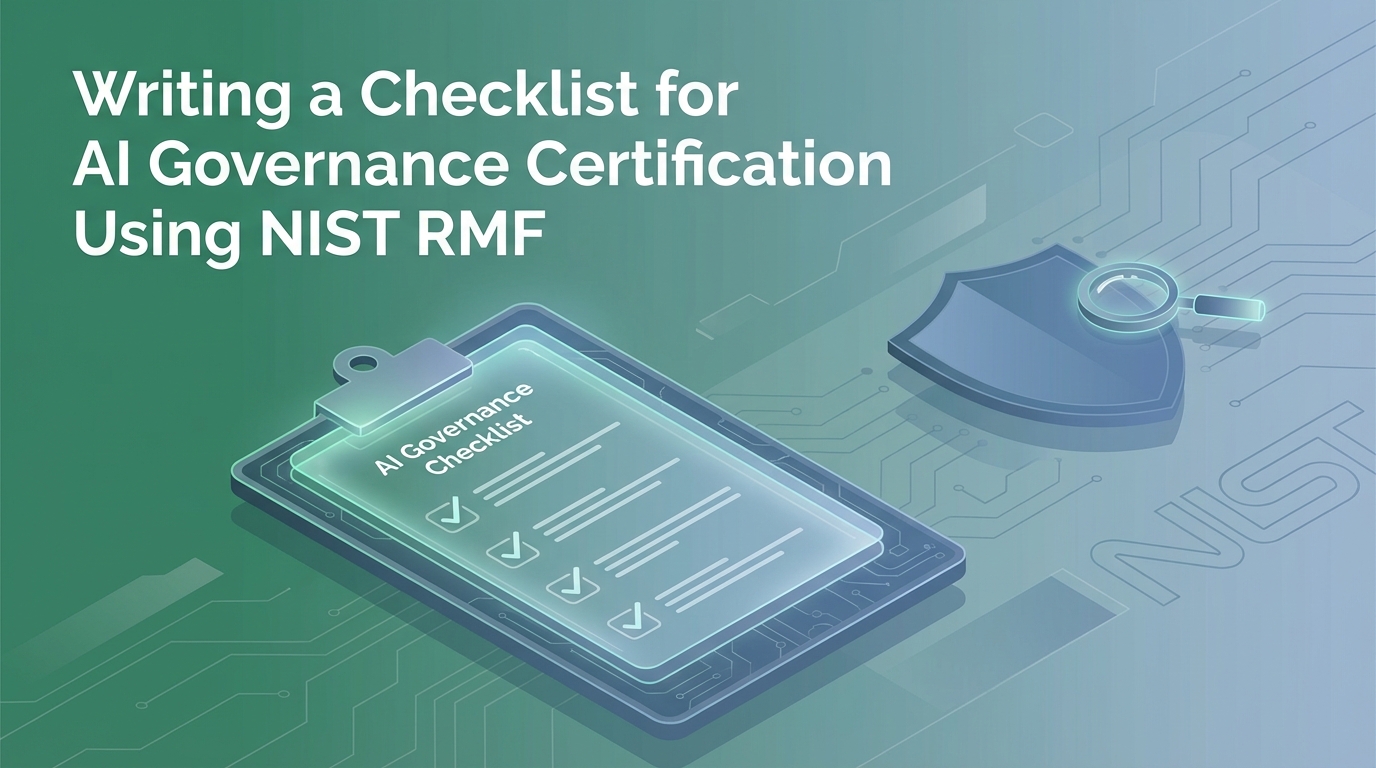
In an era where AI technologies permeate every sector, establishing robust governance frameworks is paramount. The National Institute of Standards and Technology (NIST) Artificial Intelligence Risk Management Framework (RMF) offers a structured approach for managing risks associated with AI systems.
Crafting a checklist for AI governance certification using the NIST RMF involves understanding the framework's core components and tailoring them to specific organizational needs. This guide outlines the step-by-step process.
1. Understand the NIST AI RMF
Familiarize yourself with the structure and objectives. The framework is designed to help organizations manage risks while promoting trustworthiness. It comprises foundational principles and four core functions: Govern, Map, Measure, and Manage.
2. Define AI Governance Objectives
Identify your organization's specific goals. Consider ethical AI use, regulatory compliance, transparency, and accountability. Your checklist should align with these objectives to ensure systems are deployed responsibly.
3. Align with Core Functions
Define relevant activities for each of the RMF's core functions:
- Govern: Establish governance structures, policies, and ethical guidelines.
- Map: Document AI systems, data sources, and deployment environments comprehensively.
- Measure: Implement mechanisms to evaluate performance and risk levels (accuracy, fairness, reliability).
- Manage: Develop strategies for managing identified risks and incident response plans.
4. Incorporate Organizational Values
Embed your organization's specific values and principles into the checklist. This ensures governance focuses on more than just technical and regulatory compliance.
5. Engage Stakeholders
Stakeholder engagement is crucial. Include checklist items that ensure diverse perspectives—from user feedback to expert panels—are considered in the AI lifecycle.
Conclusion
Creating a checklist using the NIST RMF is a comprehensive process that requires a deep understanding of your organization's context. By aligning with these core functions, you can develop a robust framework for the responsible use of AI.